Florida Restaurant Food Safety After a Hurricane: Power Outages, Boil-Water Notices and Reopening
What Florida restaurants must do after hurricanes, power outages and boil-water notices, including food temperatures, ice, water safety and reopening.
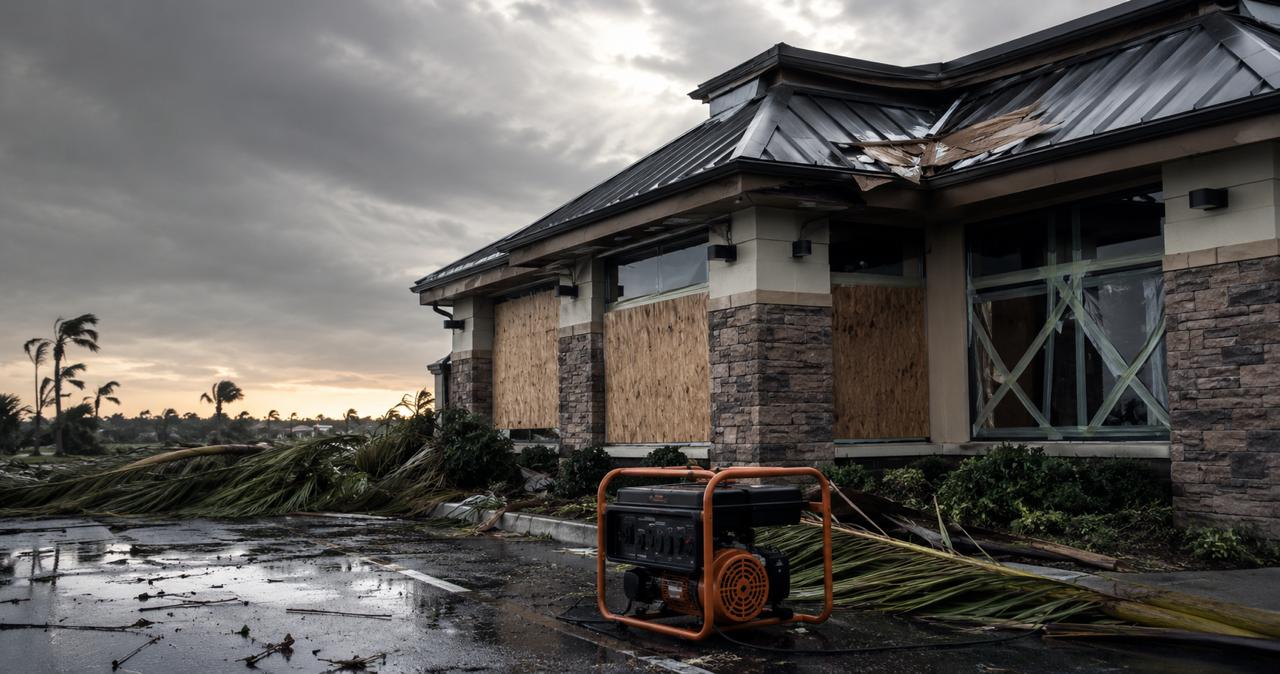
A hurricane can pass in a matter of hours. For Florida restaurants, the food-safety problems it leaves behind can last much longer.
Power outages can shut down refrigeration. Water interruptions can make handwashing and dishwashing impossible. Boil-water notices can affect everything from ice machines and fountain drinks to produce washing and food preparation. Floodwater can contaminate food, equipment and entire kitchens.
And just because the lights are back on does not necessarily mean a restaurant is ready to start serving again.
Florida’s Department of Business and Professional Regulation, or DBPR, specifically instructs public food service establishments to take precautions after power outages, water interruptions, flooding and other emergencies that could compromise food or the operation of a restaurant.
For diners, understanding what happens behind the scenes can make Florida restaurant inspection history much easier to interpret after a major storm.
Power back on does not mean a restaurant is safe to reopen.
Refrigeration has to be verified, not assumed. Water has to be safe, not just running. And any boil-water notice changes ice, drinks, food prep and handwashing — not just what comes out of the tap.
A Power Outage Is More Than an Inconvenience for a Restaurant
At home, a power outage may mean flashlights, a warm house and trying not to open the refrigerator.
Inside a commercial kitchen, losing electricity can affect dozens of pieces of equipment at once.
Walk-in coolers, reach-in refrigerators, freezers, ice machines, dishwashing equipment, hot-holding units and other essential systems may all depend on electricity. DBPR’s emergency recovery guidance says restaurants should not operate when they do not have electrical power, or generators, necessary to run essential equipment.
One of the biggest concerns is time and temperature control for safety food, often called TCS food.
These are foods that require temperature control because bacteria can grow rapidly when they are held outside safe ranges. Examples can include meat, poultry, seafood, dairy products, cooked rice and many prepared foods.
Florida’s emergency guidance instructs food service establishments to identify TCS foods that may have been above 41°F or below 135°F for more than four hours after power is restored. Those foods must be discarded. DBPR also instructs restaurants to maintain cold foods at 41°F or below and hot foods at 135°F or above.
That means restoring electricity is only the beginning.
A restaurant may still have to determine how long refrigeration was lost, check food temperatures and discard inventory before normal operations can resume.
What Happens When a Boil-Water Notice Is Issued?
A Florida boil-water notice can create an entirely different set of restaurant food-safety problems.
Consumers tend to think of a boil-water advisory as something affecting the glass of water coming from the faucet. In a restaurant, water touches much more than drinking glasses.
Florida’s boil-water guidelines say restaurants should not serve tap water while a notice is in effect. They must instead use water from an approved bottled source, boiled water or another approved method outlined by health authorities.
And the rules extend well beyond drinking water.
Ice Machines and Soda Fountains Have to Be Addressed, Too
Ice is easy to overlook because it does not look like water once it reaches your glass.
But an ice machine is connected to the building’s water supply.
Under Florida’s food-industry guidance, ice produced after a boil-water notice is issued must be discarded, and ice machines should not be restarted until local health authorities determine the water supply is safe.
Restaurants are also instructed to disconnect or turn off equipment including:
- ice-making units
- soda machines
- drinking fountains
- water vending equipment
- misters
That is why a boil-water notice can affect far more of a restaurant’s menu and operations than customers might expect.
It is also why ordering a fountain soda instead of tap water does not necessarily avoid the problem. If the beverage system uses the affected municipal water supply, the same water-safety issue may apply.
Restaurants Cannot Simply Use Tap Water to Prepare Food
Food preparation is another major concern.
While a boil-water notice remains active, Florida guidance states that tap water should not be used for food processing or preparation. Restaurants must use approved bottled water or properly treated water instead.
Handwashing also has special requirements during a boil-water notice. The state’s industry bulletin calls for approved bottled, boiled and safely cooled, or properly disinfected water rather than ordinary untreated tap water. It also prohibits bare-hand contact with ready-to-eat foods while the notice is in effect.
For a busy restaurant, those requirements can dramatically change how a kitchen operates.
Floodwater Creates a Different Kind of Food-Safety Risk
Power and water are not the only problems inspectors and restaurant operators have to consider after a hurricane.
Floodwater may carry sewage, chemicals, debris and other contaminants into food-storage or preparation areas.
DBPR’s emergency recovery guidance directs restaurants to discard food that has come into contact with floodwater, sewage, smoke, chemicals or other liquid contaminants. Certain porous or vulnerable food containers exposed to contamination must also be thrown away.
The same concern extends to equipment.
When a restaurant has been exposed to contamination, Florida guidance calls for equipment and food-contact surfaces to be properly cleaned and sanitized with safe water. DBPR says the establishment should not operate until the facility has been thoroughly cleaned and sanitized or disinfected.
In other words, reopening after a flood is not simply a matter of mopping the floor and turning the equipment back on.
Can a Florida Restaurant Stay Open After a Hurricane?
Possibly.
A storm itself does not automatically close every restaurant in an affected area.
The important question is whether the establishment can still operate safely.
A restaurant with a generator, an approved safe water supply, functioning refrigeration and no contamination may be in a very different position from a restaurant that has lost refrigeration or running water.
DBPR specifically advises establishments not to operate without a safe water supply or the electrical power needed to operate essential equipment.
That distinction matters when reading Florida restaurant inspection reports after a storm.
A restaurant closure related to loss of water or refrigeration is not necessarily evidence of poor everyday housekeeping. Sometimes the underlying problem is infrastructure.
But infrastructure failures can still create serious food-safety hazards, which is why inspectors treat them seriously.
Why “No Potable Water” Can Lead to an Emergency Closure
Recent Florida restaurant inspection records show just how important running potable water can be.
During an August 24, 2026 inspection of Mr Gourmet in Orlando, DBPR inspectors documented that the establishment had no potable running water. The inspection notes stated that water was unavailable at handwashing and warewashing facilities, employees could not properly sanitize food-contact surfaces, and there were no functioning dishwashing facilities because of the water outage.
DBPR recommended an emergency order.
There is no indication in the inspection record that this particular water failure was caused by a hurricane, so it should not be characterized as storm-related.
But the inspection is a useful real-world example of why losing potable water can become an immediate restaurant food-safety issue. Without safe running water, basic protections such as handwashing, cleaning and sanitizing can quickly break down.
The restaurant’s callback inspection the very next day, August 25, found the establishment had complied — a reminder that a fast callback outcome reflects a corrected condition, not a minor original problem. More on that distinction below.
What Happens After a Boil-Water Notice Is Lifted?
The process does not necessarily end the minute local authorities announce that the water is safe again.
Florida’s guidelines instruct establishments to flush water lines for five minutes at each tap after a boil-water notice is rescinded.
That flushing process should include equipment connected to the water supply, including drinking fountains, misters, soda machines and ice makers. Restaurants should also discard the first bin of ice after restarting an ice maker.
Depending on the circumstances, equipment may also need to be sanitized and water filters may need attention before normal use resumes.
That makes the restoration of safe municipal water the beginning of a restaurant’s return to normal operations, rather than necessarily the end of the process.
What Florida Diners Should Check After a Major Storm
You do not need to inspect the restaurant yourself.
But after a hurricane, widespread power outage, major flood or extended boil-water notice, it makes sense to look at the available information before drawing conclusions about a restaurant.
Start with the restaurant’s Florida inspection history.
On InspectFL, look for recent records involving:
- no potable running water
- refrigeration problems
- improper food temperatures
- sewage or wastewater issues
- plumbing failures
- contaminated food
- stop-sale orders
- emergency orders
- callback inspections
Then look at what happened next.
A problem found during an inspection is important. The follow-up can be just as important.
Did the restaurant clear its callback inspection? Did similar violations appear again? Was the problem isolated, or does the inspection history show a pattern?
That broader timeline usually tells diners much more than a social-media post saying a restaurant was simply “shut down.”
InspectFL has previously found that restaurants can correct the immediate condition behind an emergency closure and reopen while still having a broader inspection record worth reviewing.
Reopening Does Not Mean the Original Problem Was Minor
This is one of the most important distinctions in Florida restaurant inspection records.
A restaurant that reopens quickly after a closure did not necessarily experience an insignificant problem.
It may mean the restaurant successfully corrected the condition that required immediate action.
Likewise, a hurricane-related closure does not necessarily mean the restaurant has a history of food-safety problems.
Context matters.
That is the difference between reading an inspection headline and understanding the inspection history.
The Bottom Line
For Florida restaurants, hurricane recovery involves much more than reopening the doors.
Safe refrigeration has to be restored. Food temperatures may need to be evaluated. Contaminated food may need to be discarded. Affected kitchens and equipment may require cleaning and sanitizing. A boil-water notice can take ice machines, soda fountains and ordinary tap water out of service.
And when essential utilities are unavailable, continuing to operate may not be an option.
For consumers, the best approach is not panic and it is not assumption.
Check the record.
A Florida restaurant inspection can tell you what inspectors actually found, whether an emergency action was taken, what happened during the callback and whether the issue appears to be part of a larger pattern. If you’re new to reading these records, our How It Works guide walks through what each term means.
That is exactly what InspectFL is designed to make easier to see.
📬 Want this in your inbox every Monday?
Florida's cleanest and dirtiest restaurants. Currently free.
Want to check a restaurant?
Search any Florida restaurant's inspection history and grade.
Search RestaurantsMore from Behind the Kitchen Door
Why Repeat Florida Restaurant Violations Matter
Learn how to read repeat Florida restaurant inspection violations, callbacks, and patterns before deciding where to eat.
Aug 9, 2026
What an Emergency Order Means in Florida Restaurant Inspections
An emergency order is Florida's strongest restaurant inspection action. Here's what it actually means, what usually triggers it, and how a restaurant reopens.
Apr 30, 2026
What Happens When a Florida Restaurant Fails an Inspection
Florida restaurants can have a bad inspection and stay open the same day. Here is how the DBPR system actually works and what diners should check next.
Apr 19, 2026

Join the discussion
Seen this place in person? Share what stood out — cleanliness, food handling, service, or whether the inspection record matches the real experience.
Add your take in under a minute
Sign in once, then comment, reply, and save restaurants to your watchlist.
Enter the 6-digit code sent to
Helpful comments beat hot takes.
Loading comments…
No comments yet — be the first person to add useful context.