InspectFL and Life Kitchen Florida: Two Tools Helping Diners Make Educated Choices
InspectFL and Life Kitchen Florida both turn DBPR restaurant inspection records into something readable. Here's how each approach works — and why more transparency tools are good for Florida diners.
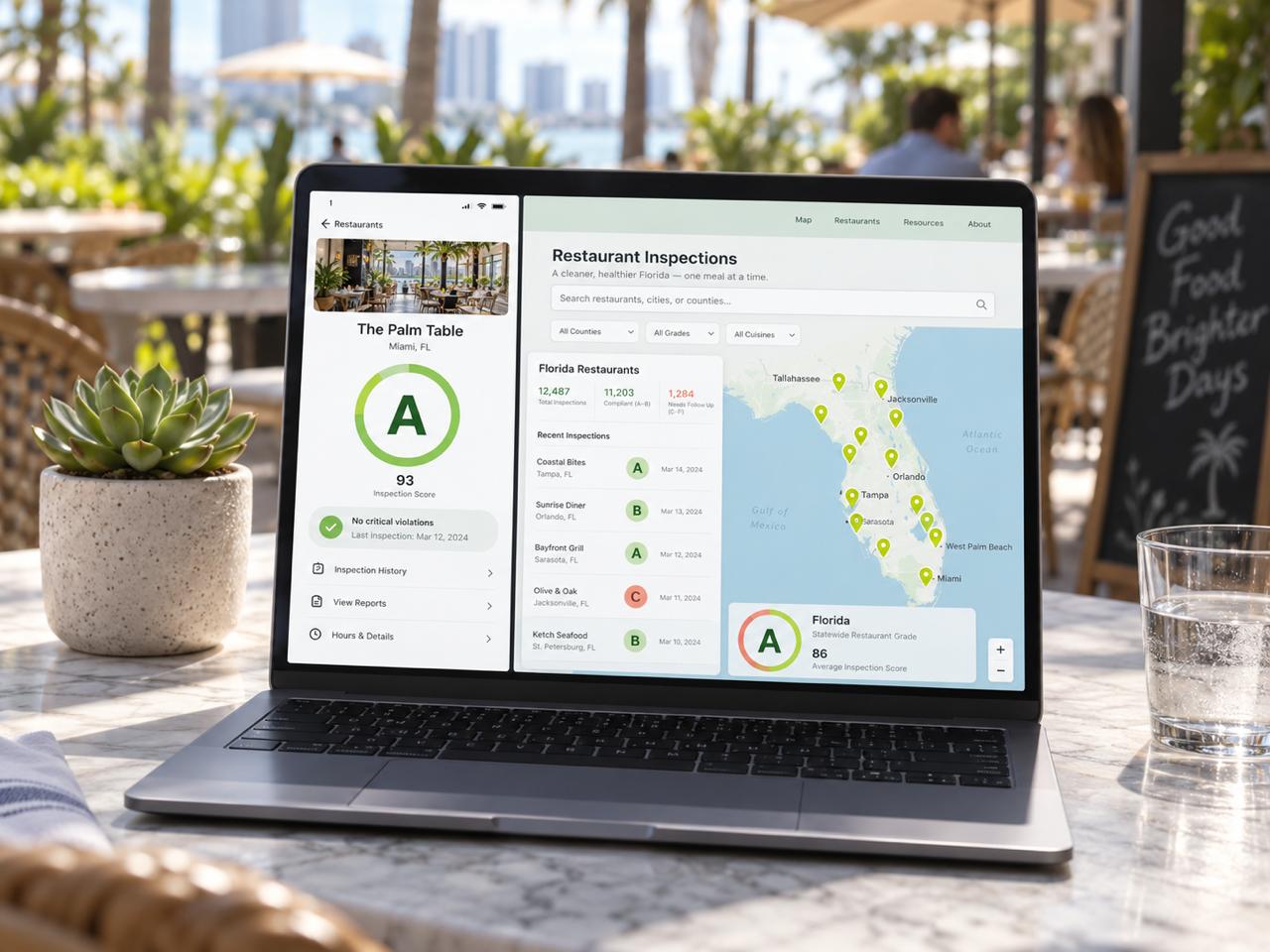
Florida diners have more tools than ever to check a restaurant’s inspection history before they sit down. Two of them — InspectFL and Life Kitchen Florida — draw from the same public source and share the same basic mission: help everyday people make a more educated decision about where to eat.
Both platforms take inspection records from the Florida Department of Business and Professional Regulation (DBPR) and turn them into something a regular person can actually use, instead of a raw government report most diners would never think to look up. That’s a genuinely good thing for the public, and it’s worth more diners knowing both options exist — not just one.
Here’s an honest look at how each approach works, including how InspectFL’s scoring works under the hood, so you can use whichever tool — or both — fits how you like to research where you eat.
Same public data, two ways to put it in your hands.
Life Kitchen Florida is built around a mobile app — download it, and you get restaurant search, grades, inspection history, and nearby results on your phone. InspectFL is web-first: no download, works on any browser, and leans harder into historical context — a Health Score that weighs recent violations more heavily, tracks follow-up inspections, and distinguishes violation severity, plus broad browsing by city, county, and ZIP code. Both exist because Florida's public inspection records deserve to be easy to find.
Why More Transparency Tools Are Good for Diners
Restaurant inspection records have always been public. The DBPR publishes them. But “publicly available” and “easy for a regular person to actually use before dinner” are two very different things.
That’s the real problem both InspectFL and Life Kitchen Florida are solving — just with different formats. Every tool that turns a raw government record into something a diner can glance at in the parking lot is a win for transparency. The more ways this information reaches people, the more informed decisions get made, and the more accountability there is across the board.
Neither platform is competing with the other for the same thing everyone actually benefits from: more people checking a score before they order.
Two Different Approaches to the Same Information
Life Kitchen Florida has long offered restaurant inspection lookups through a dedicated mobile app. Users can search for restaurants, review inspection histories, view grades, find nearby establishments, and save favorites — a familiar setup if you’re used to app-based local search tools.
InspectFL takes a web-first approach instead.
There’s no app to download. InspectFL works directly in a browser — phone, tablet, laptop, or desktop — at InspectFL.org. That distinction sounds minor, but it changes how people actually use the information.
Someone researching restaurants from a laptop at home doesn’t have to switch to their phone. Someone standing outside a restaurant can pull it up in Safari or Chrome without installing anything first. And because every restaurant has its own page with its own URL, a specific inspection record can be shared through a text message, email, or social post — something an app-only experience can’t do as easily.
Neither approach is objectively “better” — they just serve different habits, and that’s exactly why having both matters. If you already live in an app for everything, Life Kitchen fits that pattern. If you’d rather not add another icon to your home screen, InspectFL skips that step entirely. Either way, the record gets seen.
Browser Access and Mobile App Experience
The most noticeable difference between the two is simply how you get to the data.
Life Kitchen is centered on its mobile app. InspectFL is centered on the open web at InspectFL.org.
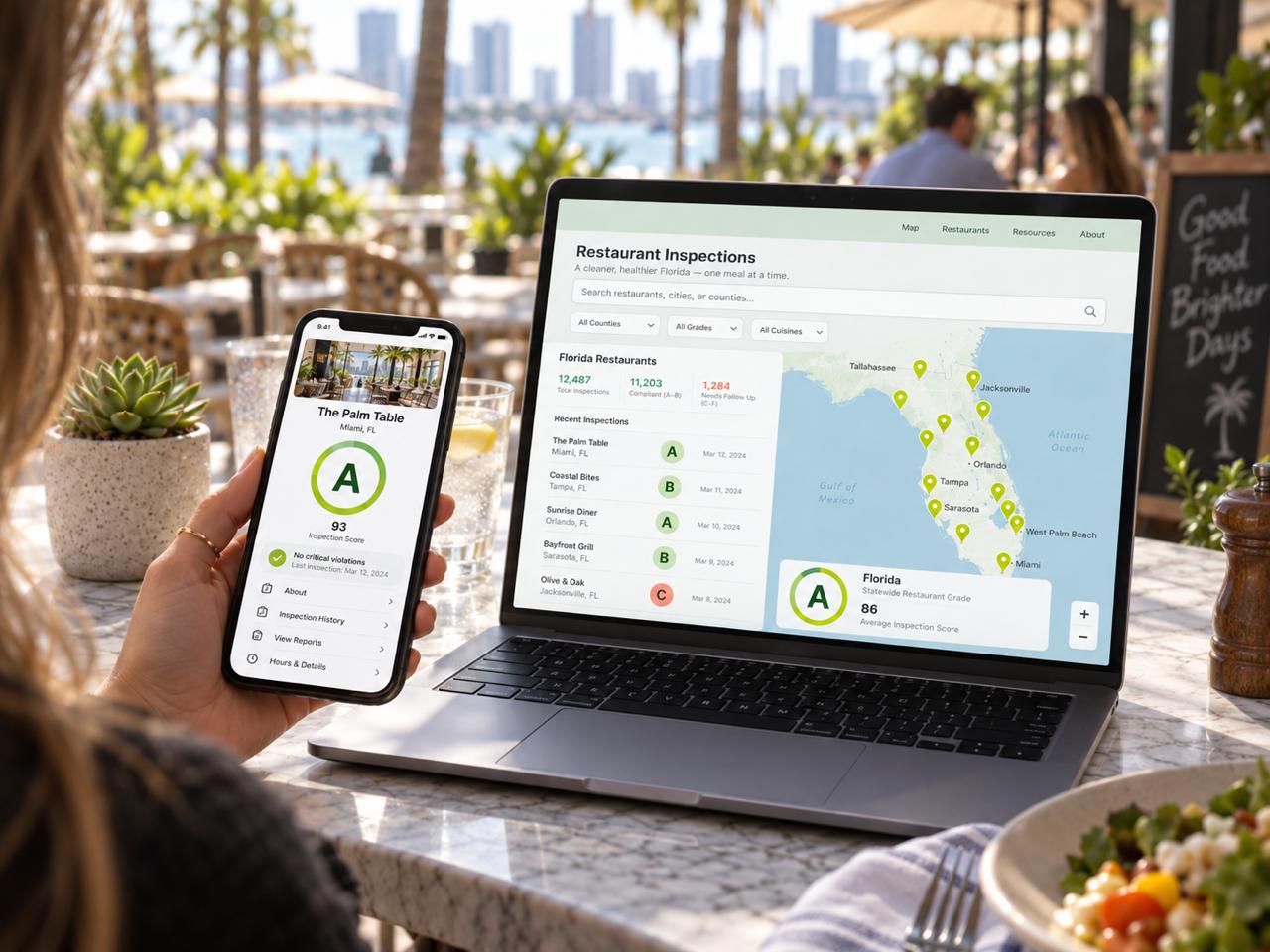
For app-first users, Life Kitchen offers a familiar, install-once experience with saved favorites and nearby lookups baked in.
For everyone else, InspectFL removes the friction of downloading anything at all. That makes it easier to:
- Look something up on a desktop computer while planning where to eat later
- Share a specific restaurant’s inspection record through text or email
- Land on a restaurant’s inspection page directly from a Google search
- Check a restaurant from a borrowed phone or a work computer without installing an app
If your search habit starts on Google rather than inside an app you already have installed, a browser-first tool tends to be the faster path — and if you’re already comfortable in an app-based workflow, that’s a perfectly good way to get the same public record.
Different Ways to Search for Restaurants
Both platforms help you find a specific restaurant, but InspectFL puts extra weight on broader geographic browsing rather than just single-restaurant lookups.
- Restaurant name
- Street address
- City
- ZIP code
You can also browse by county, by category, and by other filters — useful when you’re not chasing one specific place.
For example: a diner deciding where to eat in Tampa this weekend might want to compare several options at once, scan every restaurant in a specific ZIP code, or get a feel for inspection activity across an entire county before narrowing it down. That kind of open-ended browsing is where InspectFL’s geographic pages do the most work.
Life Kitchen also supports search and nearby-restaurant lookups through its app, which is useful when you already know roughly where you’re headed and want a quick check on the go.
The practical difference: Life Kitchen tends to shine for “check this one place near me right now.” InspectFL tends to shine for “show me the full picture of this area before I decide.” Both answer a real question diners actually have.
Understanding the Inspection Results
Raw inspection records use terminology that doesn’t mean much to most diners. Terms like:
- Warning Issued
- Call Back – Complied
- Administrative Complaint Recommended
- Emergency Order Recommended
…don’t explain, on their own, what actually happened in the kitchen or how serious it was.
Making that terminology understandable is one of InspectFL’s central goals. InspectFL pairs the underlying DBPR record with a Health Score and letter grade, so you can get a sense of a restaurant’s overall inspection history at a glance instead of parsing regulatory language line by line — see how InspectFL’s letter grades work for a full breakdown. Life Kitchen also presents restaurant grades based on inspection information, giving consumers another simplified way to review the same underlying records. Different methodologies, same underlying goal: make the record understandable.
One important clarification that applies to any tool in this space: Florida DBPR does not issue official A-F letter grades. The InspectFL Health Score and corresponding letter grade are independent tools designed to help consumers interpret publicly available inspection data — not something the state assigns itself. It’s worth knowing that distinction no matter which tool you use.
Looking Beyond a Single Inspection
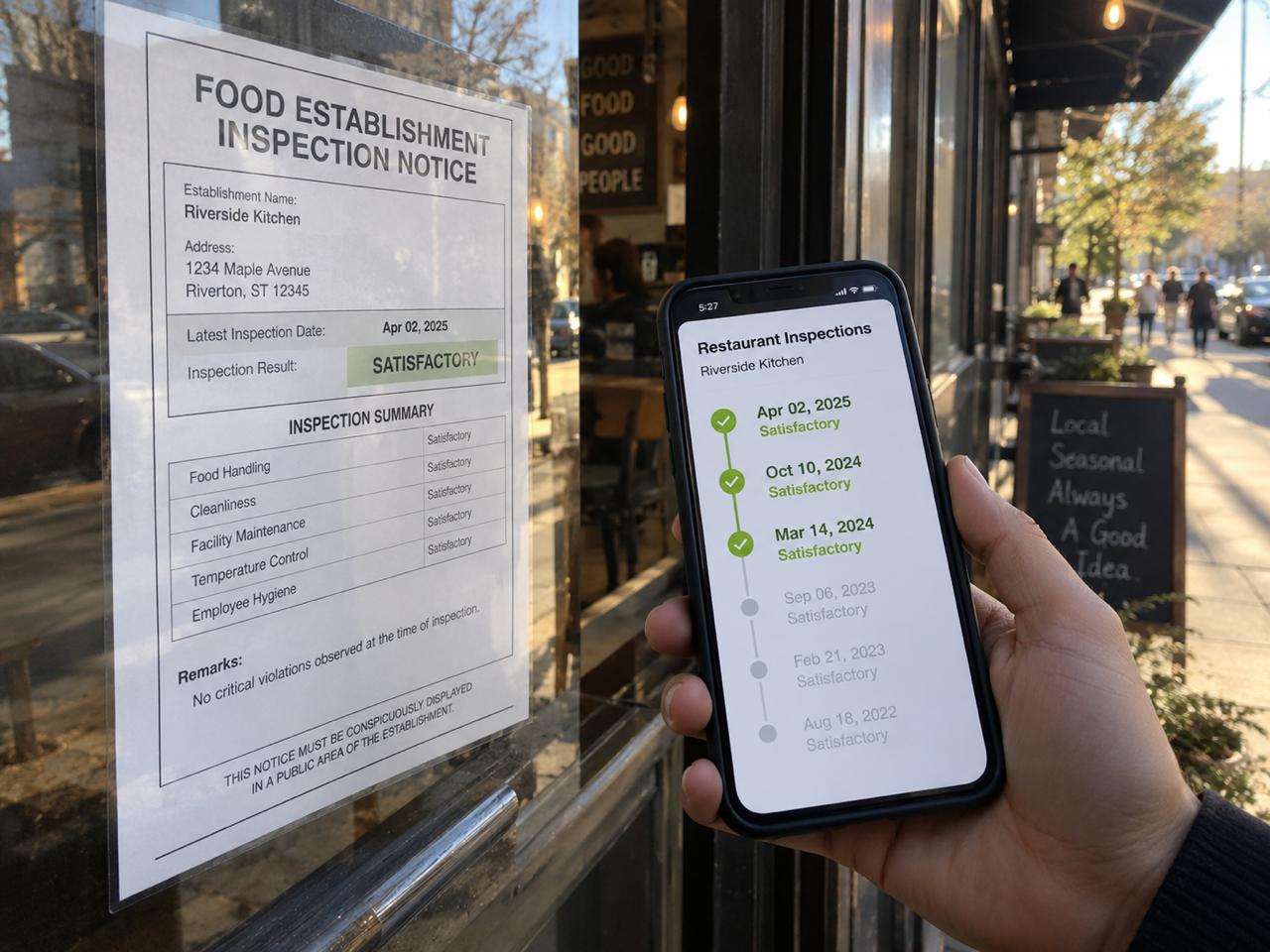
A single inspection can tell you what an inspector observed on one particular day. A restaurant’s full inspection history can tell a much larger story.
InspectFL places significant emphasis on that historical context. Users can review past inspections to see whether problems appear isolated or recurring — looking for patterns such as:
- Repeated violations
- Improving inspection results
- Recent violations
- Follow-up inspections
- Corrected problems
- Ongoing compliance concerns
This kind of context can help you avoid drawing conclusions from a single inspection alone. A clean report today means less if the same violation keeps showing up every few months — and a rough report means less if it was the exception in an otherwise long, clean history.
Giving More Weight to Recent Information
InspectFL’s Health Score methodology considers how recently violations occurred. Recent violations carry more weight in the current score, while older violations gradually carry less.
The reasoning is simple: a violation from last month likely says more about a restaurant’s current operations than something that happened years ago. At the same time, older inspection history remains fully visible, so you can still see the broader record if you want it.
That balance — recent conditions matter, but historical patterns shouldn’t disappear — is central to how the score works.
Recognizing Follow-Up Inspections
InspectFL also looks at what happens after a restaurant receives a violation.
Florida inspectors may return to determine whether cited conditions were corrected, and InspectFL incorporates certain callback results into its scoring methodology. A restaurant that corrects a problem and receives a compliant follow-up inspection is a different situation from one where the same issue keeps showing up.
In other words, InspectFL doesn’t just flag that a violation happened — it helps you see what happened next.
Violation Severity Matters
Not every violation represents the same level of concern. InspectFL distinguishes between different violation severity levels so the score reflects what went wrong, not just how many things did.
A restaurant with several relatively minor issues can present a very different picture than one with fewer but more serious food-safety violations. Both InspectFL and Life Kitchen simplify inspection data for consumers, but InspectFL places particular emphasis on explaining severity and why certain violations matter more than others.
Exploring More Than One Restaurant
Life Kitchen is especially useful for a mobile-first check on one restaurant or a nearby area. InspectFL expands the experience into broader research and comparison. Visitors can explore:
- Restaurants by city
- Restaurants by county
- Restaurants by ZIP code
- Restaurant categories
- Recent inspection activity
- Higher-performing restaurants
- Restaurants with more serious inspection histories
- Local and statewide trends
That makes InspectFL useful not only for checking one restaurant, but for comparing several dining options at once.
Educational Content and Restaurant Inspection News
InspectFL also publishes educational articles and data-driven content about restaurant inspections in Florida, covering topics like restaurant closures, common violations, food-safety trends, emergency orders, repeat violations, inspection grades, and local or county-level comparisons.
Rather than only displaying individual restaurant records, InspectFL aims to provide context around the larger food-safety picture — how the inspection system works, not just what one report says. That’s a piece of the transparency puzzle a mobile-first lookup tool isn’t necessarily built to cover, and it’s part of why having multiple tools with different strengths benefits the public.
Sharing Restaurant Information
Because InspectFL is web-based, individual restaurant pages can be shared using a standard link. That’s helpful when friends are deciding where to eat, someone wants to share an inspection history, a restaurant is mentioned in a news story, or you just want to revisit a page later.
Life Kitchen’s app-based experience may appeal more to users who prefer keeping restaurant research inside a dedicated mobile app. Again, the difference is largely about preference — and either way, the underlying public record gets in front of more people.
Two Tools, One Goal
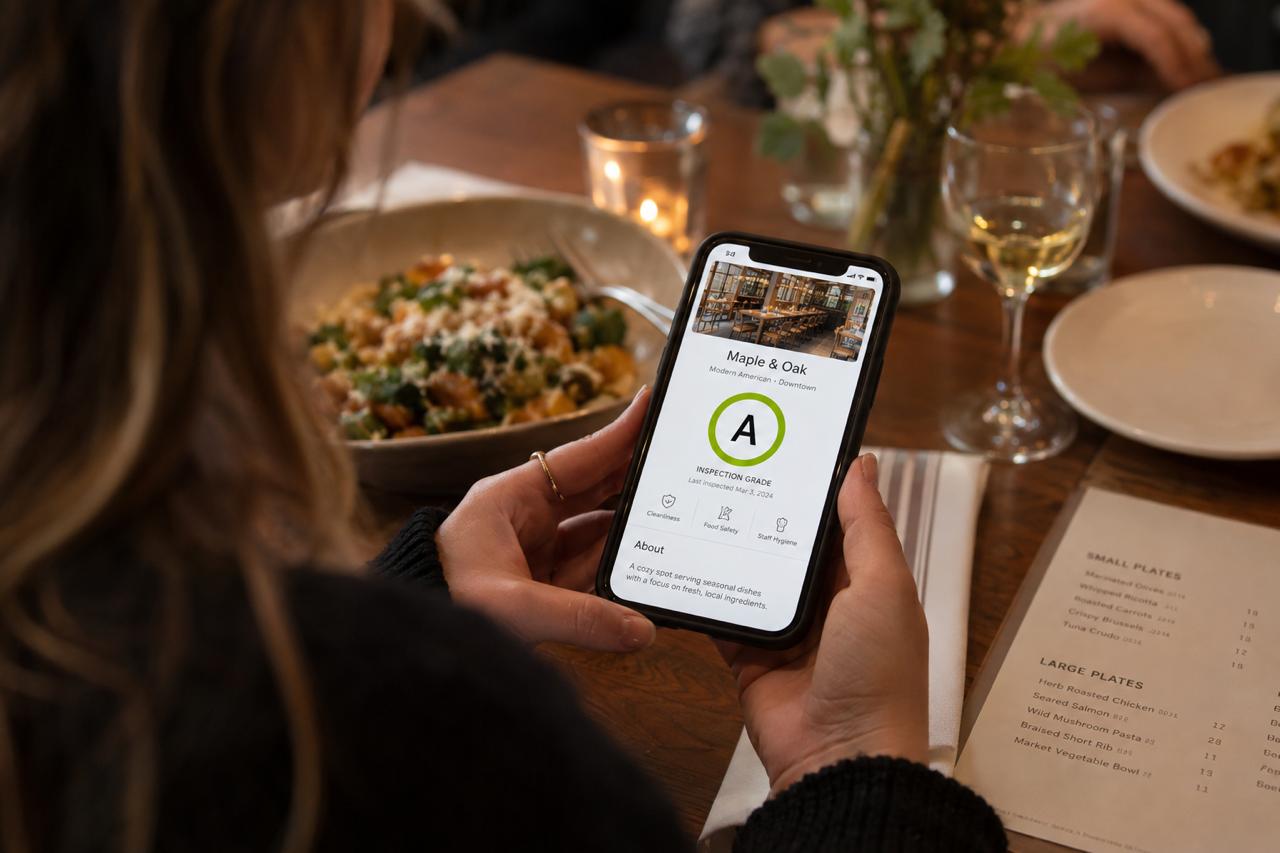
Both InspectFL and Life Kitchen Florida serve an important public purpose: making Florida restaurant inspection information easier for the public to access.
- Life Kitchen provides a mobile app experience with restaurant search, nearby results, grades, and inspection history.
- InspectFL offers a browser-based experience with restaurant search, detailed inspection histories, Health Scores, local browsing, rankings, trends, educational content, and broader statewide exploration.
Consumers who prefer a dedicated mobile app may enjoy Life Kitchen. Consumers who want to access inspection information from any browser, compare multiple restaurants, explore local trends, and dig deeper into the history behind a score may prefer InspectFL. Plenty of diners use whichever one is fastest in the moment — and there’s no reason not to use both.
Ultimately, both services exist for the same reason: helping Florida diners make a more educated decision when choosing where to dine out. More transparency, delivered in more ways, is good for everyone — diners and honest restaurants alike.
Making Public Information Easier to Use
Restaurant inspection records already belong to the public. The challenge is turning that information into something consumers can easily find and understand, and different platforms take different approaches to solving it — which is exactly how it should work.
InspectFL’s approach is centered on accessibility, context, comparison, and education. The goal is simple: help Florida diners better understand the inspection history behind the places where they eat, and support a broader culture of restaurant inspection transparency across the state.
Know before you go
No app, no signup required. Search any Florida restaurant by name, address, city, or ZIP code, and see the full inspection history behind the score.
Frequently Asked Questions
Is InspectFL affiliated with Life Kitchen Florida?
Do I need to download an app to use InspectFL?
Does Florida DBPR issue official A-F letter grades?
Does InspectFL only look at the most recent inspection?
Does a corrected violation still count against a restaurant?
Why does Florida benefit from having more than one restaurant inspection tool?
Where does the underlying inspection data come from?
Disclaimer: Restaurant inspection information displayed by InspectFL originates from the Florida Department of Business and Professional Regulation. Florida does not issue official A-F restaurant inspection grades. InspectFL Health Scores and letter grades are independent calculations intended to help users interpret publicly available inspection records. Inspection results reflect conditions observed at the time of inspection and may not reflect current conditions.
📬 Want this in your inbox every Monday?
Florida's cleanest and dirtiest restaurants. Currently free.
Want to check a restaurant?
Search any Florida restaurant's inspection history and grade.
Search RestaurantsMore from Behind the Kitchen Door
Why Repeat Florida Restaurant Violations Matter
Learn how to read repeat Florida restaurant inspection violations, callbacks, and patterns before deciding where to eat.
Aug 9, 2026
What an Emergency Order Means in Florida Restaurant Inspections
An emergency order is Florida's strongest restaurant inspection action. Here's what it actually means, what usually triggers it, and how a restaurant reopens.
Apr 30, 2026
What Happens When a Florida Restaurant Fails an Inspection
Florida restaurants can have a bad inspection and stay open the same day. Here is how the DBPR system actually works and what diners should check next.
Apr 19, 2026

Join the discussion
Seen this place in person? Share what stood out — cleanliness, food handling, service, or whether the inspection record matches the real experience.
Add your take in under a minute
Sign in once, then comment, reply, and save restaurants to your watchlist.
Enter the 6-digit code sent to
Helpful comments beat hot takes.
Loading comments…
No comments yet — be the first person to add useful context.